
Lock for Vans: Top Security Upgrades for 2026

Van theft in England and Wales still follows a pattern that catches a lot of owners out. The Crime Survey for England and Wales said the most common timing for vehicle theft was during the week, 76%, and in darkness, 58%, while the most common method of entry was manipulating the signal from a remote locking device, 36%. That makes a proper lock for vans less of an upgrade and more of a correction to how theft occurs in the world. ONS vehicle theft figures
Factory central locking is fine until somebody targets the signal, the linkage, or the weak point in the door hardware. Vans parked on drives, in semi-private spaces, or at depots need a second barrier that still works when the original system has been compromised. That's why physical locks, fitted and maintained properly, remain the practical answer for tradespeople who leave tools, stock, or diagnostic kit in the back overnight. The broader van-security discussion in the Midlands is also worth a look, especially the guide from CarForms.co.uk, which lines up with what installers see every day.
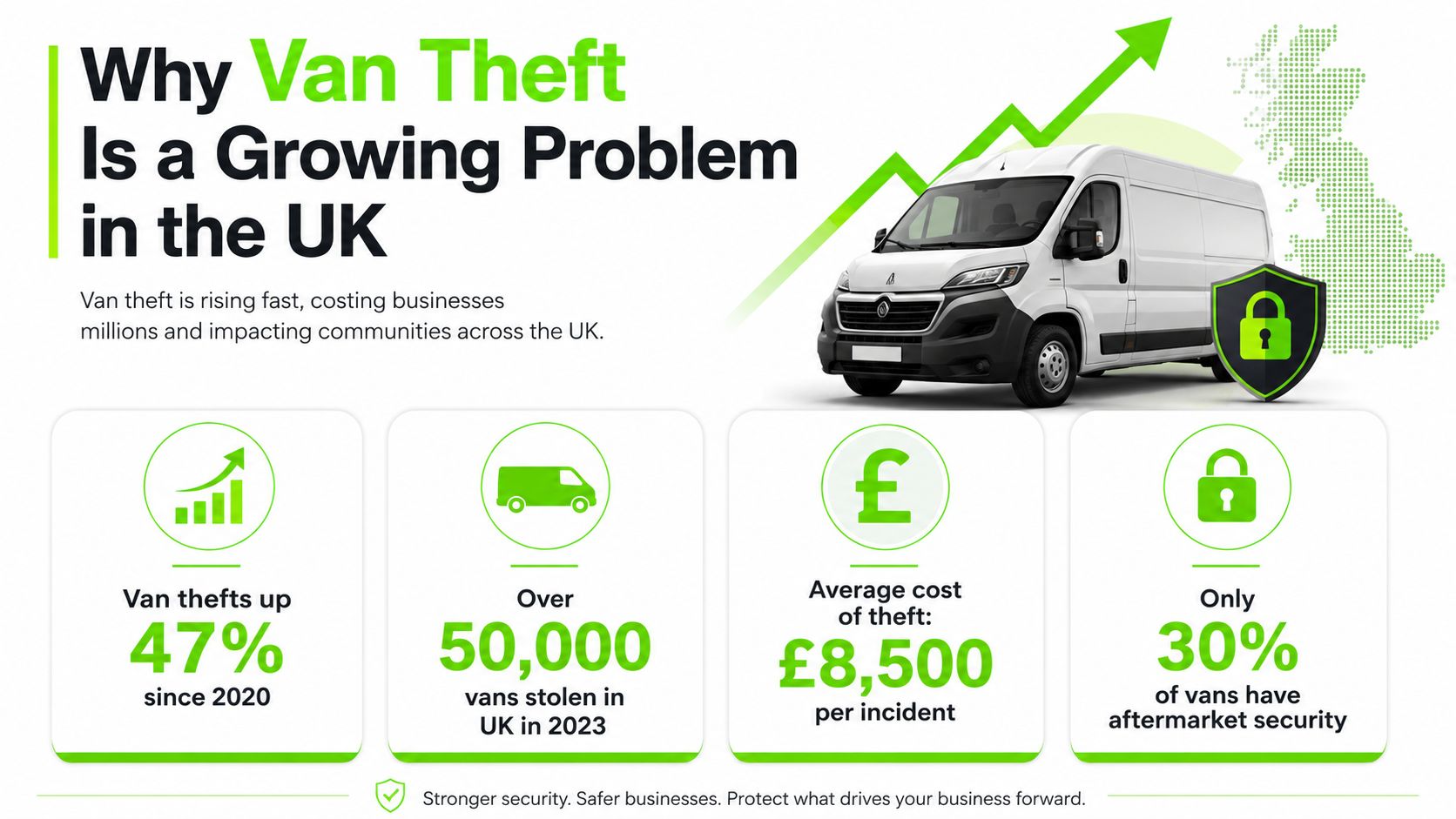
Why Van Theft Is a Growing Problem in the UK
The numbers behind van theft are hard to ignore, because they point to a crime pattern built around speed and weak points. UK van-security reporting has long pointed to vans being targeted an average of 624 times a day, which works out at about 225,000 break-ins or attempted break-ins a year. Another tracker analysis found that 89% of Light Commercial Vehicles stolen and recovered in 2018 were taken without the owner's keys, up from 82% in 2017. That is why a factory lock alone often leaves too much to chance.
What usually gets attacked first is not the lock face, but the weak link between the remote fob, the locking circuit, and the latch. That is why signal manipulation keeps appearing in theft reports, and why a van parked neatly on a driveway can still be vulnerable. Corrosion makes the picture worse. Once a door has a bit of rust around the latch, or the gap has shifted after years of use, a lock that looked fine on paper can become sloppy under pressure. Semi-private parking at home accounted for 39% of vehicle thefts overall, and 6% happened from a work car park, which matters if your van sits on a driveway, in a yard, or at a depot. ONS vehicle theft figures
A van that relies on one locking system is easier to beat than a van that forces the thief to defeat two separate barriers.
The old habit of fitting a lock and forgetting about it does not survive UK weather for long. Water gets into fixings, road salt attacks exposed hardware, and repeated slamming can leave even a decent lock out of alignment with the door it is supposed to protect. That is why the hardware choice matters less than some guides suggest. Fit, corrosion resistance, and long-term door movement often decide whether a lock still does its job after a few winters.
The same history has shaped what thieves look for. The Ford Transit was identified as the UK's most stolen vehicle in 2015, with the Mercedes Sprinter close behind, and that matters because those are the vans many tradespeople still run every day. Thieves know the common models, the common latch layouts, and the common weak spots. The broader van-security discussion in the Midlands is also worth a look, especially the guide from CarForms.co.uk, which matches what installers see on the ground. The same principle comes up in how a car immobiliser works, because electronic protection and physical security only work well when both are treated as separate layers.
Types of Van Locks Explained
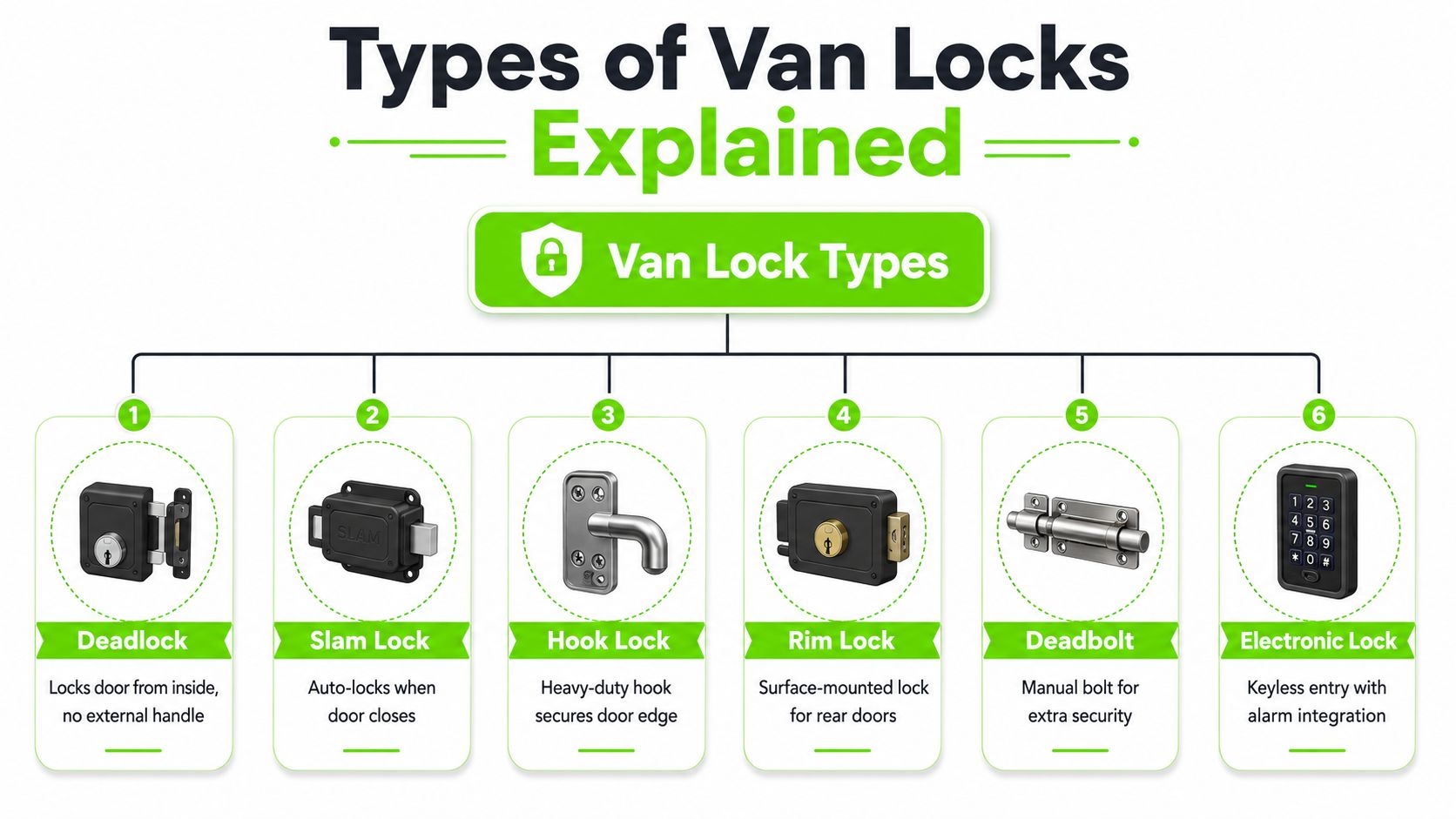
A van lock only earns its place if it still works after months of hard use, wet roads, and winter salt. A shiny fitting that looks secure in a showroom can become a weak point once the door starts to sag, the seals swell, or corrosion creeps into the fixings. The practical question is not just what the lock does on day one, but how it behaves after a few British winters.
Deadlocks and slam locks
A deadlock is a secondary bolt that works separately from the standard handle and central locking. It suits rear barn doors and side load doors where the van may be left outside overnight, because it adds a separate layer the thief has to defeat. For load-bay doors, UK advice often points buyers toward deadlocks and slamlocks, with lock covers or protective plates as a sensible extra measure. Headstone Car Tech van security guide
A slam lock engages as soon as the door shuts. That makes it a practical fit for multi-drop work, where drivers are in and out all day and should not have to remember a key every time. It is less convenient for tradespeople who keep returning to the load bay for tools, because access speed is traded for simpler closure. On vans that live on the street, the ease of use can be helpful, but only if the door alignment stays true and the mechanism is serviced before it starts to stick.
Hook locks, rim locks and electronic layers
A hook lock is the type many owners move to after a theft scare. The hook catches behind the door edge, which gives it better resistance to prying than a basic bolt in the same position. Installers often choose it as an independent secondary barrier because it does not rely on the OEM central-locking circuit, so one fault does not take out the whole security setup. Autolock EU on independent hooklocks
A rim lock is surface-mounted and can make sense on rear doors where a visible mechanical deterrent helps. Deadbolts are another manual layer, useful when the priority is a simple locking action with few moving parts. Electronic devices such as immobilisers and GPS trackers do not replace a physical lock, but they do make life harder for a thief and can support recovery or post-theft investigation. For a plain explanation of one electronic layer, the Top Motor Keys immobiliser guide is worth a read.
Corrosion and door-gap misalignment decide more failures than most buyers expect. If the door drops even slightly, a hook lock that felt solid in the workshop can start to bind, and a slam lock can stop latching cleanly. That is why the best choice on paper is not always the best choice on a wet van that gets loaded hard every day.
The practical rule is simple. Deadlocks and hook locks suit overnight protection. Slam locks suit repeated loading and unloading. Electronic layers help when you want detection, recovery, or insurance support, not just a stronger door.
How to Choose the Right Lock for Your Van
The right setup starts with how you use the van, not with a price list. A trades van that sleeps on the street all week needs different hardware from a courier van that's opened fifty times a day. Door layout matters too, because rear barn doors, a side slider, and a cab door each create different weak points.
Use Case | Recommended Lock Type | Key Consideration |
|---|---|---|
Multi-drop deliveries | Slam lock | Fast closure, less chance of a door being left unsecured |
Overnight street parking | Deadlock or hook lock | Secondary barrier matters more than access speed |
Tool-heavy trade van | Hook lock plus protective plate | Better resistance where the load bay is a target |
Rear barn doors | Pair of deadlocks or hook locks | Both leaves need protection |
Depot or fleet van | Layered security | Balance driver convenience with theft resistance |
Match the lock to the job
If your van does constant delivery work, slam locks reduce the human error that comes with repeated stops. If you're a plumber, electrician, or joiner carrying high-value tools, a deadlock or hook lock usually makes more sense because the van often sits still for long periods. Those locks create a second, separate barrier after the factory system.
Practical rule: if the van can be left unattended with expensive kit inside, don't rely on the original locking system alone.
Insurance and fleet rules can change the decision as well. Howden says deadlocks typically cost £150 to £250 per lock including installation, and it also recommends layered security, combining hook locks and deadlocks with anti-peel kits, alarms, immobilisers, and GPS tracking. It notes that Thatcham-approved features may help reduce van-insurance premiums. Howden van lock guide
The right answer is rarely one product. A van parked overnight in public usually benefits from a physical lock plus tracking. A high-turnover delivery van often needs a slam lock first, then other layers if the insurer or fleet policy asks for them.
Installation Pitfalls That Compromise Your Security
A van lock can look solid on fit day and still let you down later. In practice, the failures usually show up after weeks of rain, vibration, and door movement, not straight away. Corrosion around drilled holes is one of the biggest culprits, especially on work vans that spend their lives in wet yards, salted roads, and muddy sites.
Corrosion and seal failure
Once a panel is cut, drilled, or riveted, the exposed metal needs proper treatment. Installers and DIY guides keep mentioning painted cut edges, sealant, and spray wax because they stop rust from starting at the fixings. Skip that stage and the damage begins where the tool touched the van, then works under the finish and around the mounting point. The lock may still sit in place while the metal underneath gets weaker.
Door-gap alignment causes another set of problems. A lock can be mechanically sound and still fail to engage properly if the door has dropped, the hinges are worn, or the bodywork is slightly out of line. That happens often on vans that have been slammed thousands of times, or where previous repairs were not set up accurately. If the bolt does not land cleanly, the lock becomes a deterrent rather than a proper barrier.
Check the fit after a few days of use, not just the day it's installed. If the lock starts to scrape, bind, or sit proud, something has shifted.
Why independent barriers matter
The better aftermarket locks work as independent secondary barriers. That matters because many attacks go after the factory linkage or cable rather than the door skin itself. If the added lock does not depend on the OEM central-locking circuit, a thief does not get one easy failure point that disables everything at once. Certification matters too, and Sold Secure is cited as the UK's leading authority for security-product testing in this area.
Installation quality matters as much as the lock itself. A well-made deadlock fitted badly is still a weak point. A decent hook lock fitted with proper rust protection, correct alignment, and careful hardware placement will usually hold up better than a cheap option that looked fine in the brochure. In practice, the difference shows up in winter, after the first few months of weather and repeated use.
Van Lock Costs and Professional Fitting Options
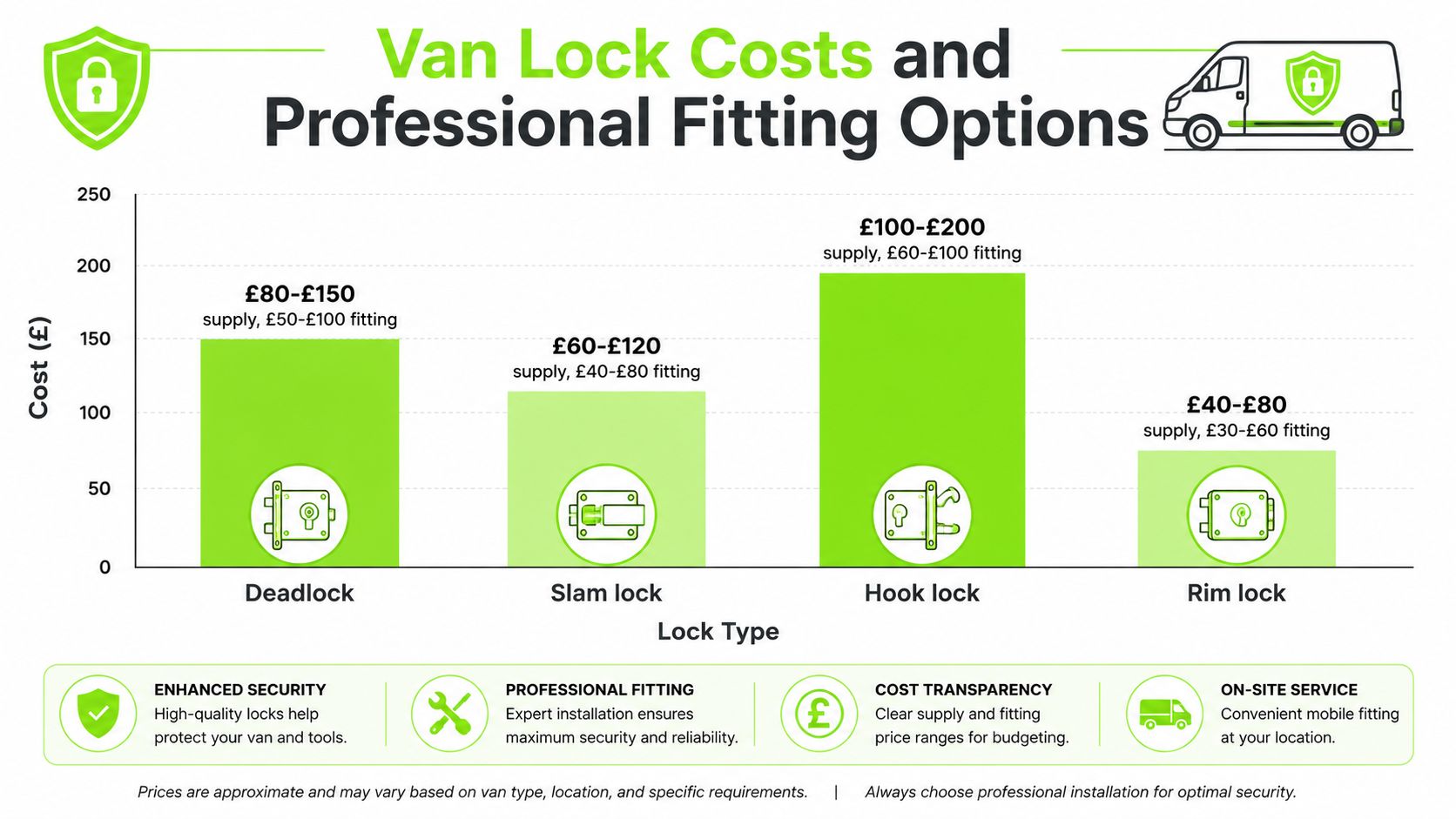
Prices vary by brand, door type, and how much trimming the installer has to do. The rough ranges below are useful for budgeting, but the final number depends on the van and the lock position.
Typical fitted cost ranges
Deadlock: £80 to £150 supply, £50 to £100 fitting
Slam lock: £60 to £120 supply, £40 to £80 fitting
Hook lock: £100 to £200 supply, £60 to £100 fitting
Rim lock: £40 to £80 supply, £30 to £60 fitting
Those figures line up with the pricing language used in UK van-security guidance. Howden van lock guide
DIY or pro fitting
DIY can make sense on simple mechanical jobs if you already know your way around panels, fixings, and door trim. But once you're dealing with electronic systems, immobilisers, or trackers, professional fitting becomes the safer choice because wiring and vehicle-specific integration matter. The same applies if the van is newer, leased, or still needs to stay warranty-friendly.
If the job affects electrics, insurance evidence, or the lock's long-term alignment, pay for the fitting.
For a few vehicles, the fit itself is the key constraint. The Gatelock Van Medium is designed for vans up to 3.5 tons, and it uses automatic closing to help with loading and unloading. That kind of detail matters because not every lock suits every van size or working pattern. Gatelock Van Medium specification
Top Motor Keys is one option for mobile security and key work across the Midlands. It also handles modern vehicle electronics, which is useful if you're combining a lock upgrade with immobiliser or tracker work rather than treating security as a single product fit.
Real Life Van Security Scenarios Across the Midlands
A sole-trader electrician in Tamworth came in after a tool theft and changed from a factory-only setup to deadlocks on the rear doors. He didn't want anything flashy, he wanted the doors to stay shut overnight on the driveway. That's the right instinct when the van carries kit that's expensive to replace and annoying to sort through on an insurance claim.
A delivery fleet manager in Birmingham chose slam locks because drivers were working multi-drop routes and needed a setup that locked itself every time the door shut. The priority there wasn't maximum overnight resistance, it was avoiding human error during a busy shift. A plumber in Sutton Coldfield went for hook locks and a tracker after the insurer asked for layered protection on a van full of tools and spares.
A construction company in Wolverhampton secured a fleet of Ford Transits with layered security, because one van type being common on site also makes it common on a thief's radar. The office had to balance driver convenience, overnight parking, and repair costs, so a single lock type wouldn't have been enough. That's also the same logic that applies to owners in Lichfield, Cannock, Burton Upon Trent, Solihull, Coventry, Atherstone, Ashby de la Zouch, Coleshill, Nuneaton, Walsall, and Birmingham when they call out for help.
If you read the Midlands theft advice in the car theft protection guide, the pattern is familiar. Layer the protection, don't trust a single weak point, and match the hardware to the parking habit.
Next Steps for Hiring a Mobile Auto Locksmith
The first question to ask is simple, can they come to the van with the right kit and fit the lock properly at your location. Mobile work saves downtime and helps with real-world problem solving, especially if the van can't be left off the road for a workshop visit. After that, check whether they use Sold Secure certified products, whether they offer an installation warranty, and whether they've worked on your make and model before.
What to verify before booking
SERMI and electronics: If the job involves modern vehicle electronics or security-related access, ask about SERMI registration.
TASSA for trackers: If you're adding a tracker, make sure the installer is TASSA registered.
Van-specific fit: Rear barn doors, side sliders, and high-roof bodies each need different mounting logic.
Aftercare: Ask how they protect drilled panels against corrosion once the work is done.
For a quick sense of what a reliable roadside or mobile service should look like, the guide to finding auto locksmith help near you is a useful reference point. The practical standard is straightforward. The locksmith should turn up equipped, explain the trade-offs clearly, and leave you with a lock that still closes cleanly after a week of use.
Top Motor Keys operates across the Midlands with mobile support, free quotes, and VAT-free pricing, so it's a workable option if you want the job done on-site rather than towing or waiting on a workshop slot. Ask for the right lock, the right fitting method, and the right aftercare, because a van lock only earns its keep if it's still doing its job six months later.
If your van needs deadlocks, slam locks, hook locks, or a proper layered security setup, get a quote from Top Motor Keys and have the fit checked at your location. The right lock for your van depends on the doors, the parking, and the way you work, and a mobile installer can match all three without taking the vehicle off the road.