
Steering Wheel Lock Stuck? Your Guide to Getting Unstuck Fast

It’s a feeling we’ve all had. You jump in the car, ready to head off, but the key won’t budge and the steering wheel is locked solid. That sudden jolt of panic is universal, but don't worry – it's a common issue and usually has a very simple fix. More often than not, a bit of gentle persuasion is all you need.
That Sinking Feeling When Your Steering Wheel Is Stuck

You slide into the driver’s seat, pop the key in, and… nothing. The ignition is completely stuck, and the steering wheel feels like it's been set in concrete. It’s a moment of pure frustration, especially when you’re in a rush in Tamworth or trying to get out of a tight spot in a Birmingham car park.
The good news? A stuck steering wheel is rarely a sign of a catastrophic failure. It's almost always a simple mechanical quirk. This guide is here to walk you through exactly why it happens and what you can do about it, without any baffling jargon.
So, Why Does a Steering Wheel Lock Up?
Understanding what’s going on behind the scenes makes fixing it a lot less intimidating. The steering lock is a basic but effective security feature, and sometimes it just gets jammed in the ‘on’ position.
Here are the most common culprits I see out in the field:
Pressure on the Locking Pin: This is the big one, responsible for 9 out of 10 cases. If you’ve parked on a hill in Lichfield or with your wheels turned hard against a kerb in Sutton Coldfield, your tyres are pushing against the steering mechanism. When you turn the engine off, a small metal pin shoots into place to lock the wheel, but all that tension from the tyres binds it up tight. It simply can't retract when you try to start the car again.
A Worn or Damaged Key: Think about how many times you’ve used your car key. Over the years, it gets worn down, can get slightly bent, or just builds up grime in its grooves. These tiny imperfections are enough to stop the pins inside the ignition cylinder from lining up properly, which in turn prevents the steering lock from disengaging.
Modern Electronic Lock Glitches: Newer cars, especially those with push-to-start buttons, often have an Electronic Steering Lock (ESL). These are great, but they need power. A weak or dying car battery can mean the ESL doesn't get enough juice to unlock, leaving your steering wheel completely immobilised.
The Simple Flaw in the System
The steering lock is brilliantly basic. When you pull your key out of the ignition, a heavy-duty metal pin shoots out from the steering column and slots into a notch on the steering shaft. Clunk. This physically stops the shaft from turning.
But here’s the rub. That simple design is also its biggest downfall. The system works a treat when everything is perfectly aligned, but it doesn't really account for the real-world pressure your front tyres can put on the steering system.
Think about it. We've all parked on a slope or with the wheels turned against the kerb – it's just normal driving. In places like Cannock or Ashby de la Zouch, with their hilly streets, it's an everyday thing. When you park like this, the entire steering rack is held under tension.
When you switch off the engine, that little security pin still does its job and slides into place. The problem is, it's now wedged in tight by all that force coming from the tyres. It's like trying to yank a bolt out of a hole that’s just a bit too small – it’s not going anywhere.
The key thing to understand is that the lock isn't faulty; it's just jammed. The pin is under so much pressure that your key doesn't have enough leverage to pull it back. This is exactly why yanking on the wheel or forcing the key is the worst thing you can do. You're fighting physics, not a broken part.
This is why a security feature that’s been around for decades can still cause such a modern-day headache. The basic mechanics haven't really changed.
A Bit of UK Motoring History
There's a reason these locks became so common in the UK. Back in the 1980s, car crime was a huge issue, so the government made steering column locks mandatory on all new cars to try and curb it.
It wasn't a magic fix for professional car thieves, but it did make a real dent in casual theft – your classic TWOC (taken without owner's consent) joyrides. A detailed study actually confirmed this. If you fancy a bit of light reading, you can find out more in the Problem-Oriented Policing Center's report on the subject.
Troubleshooting Guide: How To Safely Free Your Steering Wheel

There's nothing quite like that sinking feeling when your steering wheel is locked solid and the key won't turn. Forget generic advice. Let's get straight into the proven techniques we use daily on call-outs across the Midlands, from Atherstone to Solihull.
Step 1: The 'Gentle Wiggle' Technique
The first port of call, and usually the most successful, is what I call the 'gentle wiggle'. It sounds almost too simple, but it's all about relieving the pressure on the locking pin.
Insert the Key: Pop your key into the ignition, but don't try to turn it yet.
Find the 'Give': Grip the steering wheel and gently rock it back and forth. You’ll notice it has a tiny bit of ‘give’ in one direction.
Apply Gentle Pressure: Apply a little bit of steady pressure on the steering wheel in that same direction.
Turn the Key: While holding that light pressure on the wheel, try turning the ignition key again.
Reverse and Repeat: No luck? Don't worry. Reverse the process. Apply gentle pressure to the steering wheel in the opposite direction and then try the key.
You're looking for that magic moment where the tension eases and the lock smoothly disengages. It’s a game of finesse, not brute force.
Step 2: Check Your Key and Battery
If the wiggle method isn't cutting it, it's time to play detective. The problem might not be the lock itself.
Inspect Your Key: Take a good, hard look at your car key. Is it bent, even slightly? Are the grooves clogged with pocket lint or grime? A damaged or dirty key is a surprisingly common reason for a steering wheel lock stuck situation.
Check the Battery: In modern cars with electronic steering locks, a weak or dying battery is a prime suspect. If you’ve noticed the engine has been a bit sluggish to turn over or the interior lights seem dim, this could be your culprit. The lock's electronic mechanism simply might not have enough juice to retract.
Just the other week, I had a call from a lady in Coventry whose Ford Fiesta was completely stuck. She'd been parked on a slight incline and the wheels were turned. I talked her through the wiggle technique over the phone, and within a minute, she called back to say she was on her way. It really does work most of the time!
Crucial Warning: Never, ever force the key to turn. It's the fastest way to snap it in the ignition, turning a minor inconvenience into a major headache. Also, resist the urge to spray lubricants like WD-40 into the ignition barrel. It can gum up the internal pins and lead to a much more expensive repair.
Step 3: Consider Other Lockout Scenarios
Sometimes the problem isn't the steering lock, but something else entirely. For instance, if you've found yourself completely locked out of the car, you'll obviously need to get inside first before you can tackle the steering wheel. If you're in that pickle, you might find our guide on how to unlock your car without keys helpful.
When That Extra Security Becomes a Headache
You see them all the time, especially around Wolverhampton and Birmingham—those bright yellow bar-style steering locks. They're a classic, visible deterrent that tells any would-be thief to just keep walking. But what happens when the very thing you bought for security ends up causing the problem?
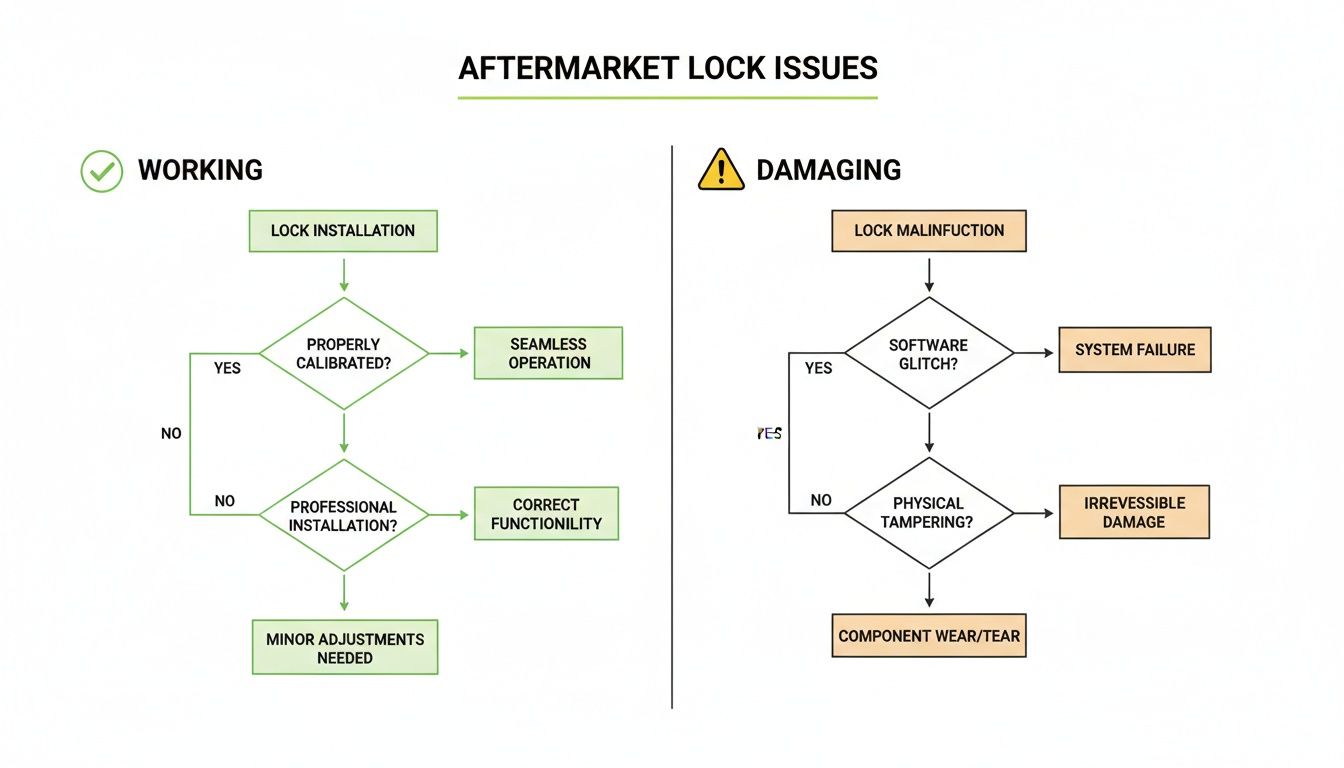
While a solid, well-made lock is a fantastic bit of kit, the market is unfortunately full of cheap knock-offs. These imitations not only fail to protect your car but can actually damage it, leaving nasty scratches and permanent dents in your steering wheel's leather or plastic.
Worse still, a poorly fitting or overtightened lock puts constant, unnatural pressure on your steering column. After a while, this strain can feel exactly like a failure of the car’s built-in factory lock.
Cheap Locks and the Damp UK Climate Don't Mix
A cheap lock is often more trouble than it's worth. Security experts have shown how easily low-quality aftermarket locks can be sawn or snapped in under a minute. Even more frustrating is that improper fitting causes many users to damage their steering wheel, and cranking it on too tight can strain the column itself. You can find out more about how these devices work and where they fall short at carkeyssolutions.co.uk.
The lovely British weather doesn't help either. All that damp and condensation can cause the mechanism inside a cheap lock to rust and seize. We've personally dealt with jobs in Burton Upon Trent and Nuneaton where a bar-style lock was jammed solid, and the owner couldn't get it off without risking serious damage to their car.
It’s a bitter irony, isn't it? In trying to protect your vehicle, a poor-quality lock can end up damaging it or leaving you stranded. It really pays to invest in a reputable brand that fits your specific car correctly.
Knowing When to Call in a Professional Locksmith
While the old gentle wiggle trick often does the job, there are definitely times when you need to step back and call in the experts. Pushing your luck and trying to force a fix for a more serious problem can quickly escalate a simple jam into a costly repair job.
Red Flags That Mean It's Time for an Expert
If you're facing any of these situations, it’s time to pick up the phone:
A ‘Steering Lock Fault’ Warning Appears: This is a clear sign the issue is electronic, not just a mechanical bind. It points to a problem with the car’s computer system or the electronic steering lock (ESL) module itself.
Your Key is Visibly Damaged: A bent, cracked, or snapped key is an immediate no-go. Trying to use a dodgy key is just asking for it to break off in the ignition.
The Key is Stuck Fast: If the key is jammed solid in the ignition and won't budge – either to turn or to come out – it's a strong indicator that the internal tumblers inside the ignition barrel have failed.
You've Tried Everything: You’ve patiently tried jiggling the wheel, you've checked the battery, and the steering wheel lock is stuck firm.
These symptoms nearly always point to underlying issues that are impossible to fix without the right know-how and tools.
Your Local Mobile Solution Across the Midlands
This is where a mobile auto locksmith really shines. Instead of forking out for an expensive tow truck to a garage or main dealer, we come directly to you. It doesn't matter if you're stranded on your driveway in Coleshill, stuck at the office in Walsall, or in a car park in Coventry – we cover the entire region.
Our 24/7 service is available across all the areas we cover, including:
Tamworth
Lichfield
Sutton Coldfield
Cannock
Burton Upon Trent
Solihull
Coventry
Atherstone
Ashby de la Zouch
Coleshill
Nuneaton
Walsall
Wolverhampton
Birmingham
Our mobile vans are kitted out with advanced diagnostic tools to sort out electronic faults, reprogram keys, and fix ignition problems right there on the spot. For more general tips on getting help when you're locked out, check out our practical guide to finding a 24/7 auto locksmith.
FAQ: Your Steering Wheel Lock Questions Answered
Will a stuck steering wheel lock fail an MOT?
Yes, it absolutely can. A faulty steering lock is a classic reason for an MOT failure in the UK. The rules state the factory-fitted steering lock must work correctly. If the lock jams on, won't engage at all, or triggers a warning light, the tester will flag it as a failure. You can get more details on the specific MOT regulations at mrignition.co.uk.
Does car insurance cover a locksmith for this?
This really comes down to your individual policy. Many comprehensive plans now include key cover or breakdown assistance, which often do cover the cost of calling out an auto locksmith. The best thing to do is have a quick look through your policy documents or give your insurer a call before you book a locksmith to be sure.
What’s the cost to fix a stuck steering wheel lock?
The price can vary quite a bit depending on what’s causing the jam. A simple mechanical issue is an affordable job. However, if you have a modern car with a failed Electronic Steering Lock (ESL) module, that’s a more involved fix. One thing is certain: calling a mobile auto locksmith is almost always more cost-effective than getting your car towed to a main dealer who will add towing fees, diagnostic charges, and their own mark-up.
How can I stop this from happening again?
A few simple habits can dramatically cut the odds of dealing with a stuck steering wheel lock again.
Straighten Your Wheels: Get into the habit of straightening your front wheels before you switch the engine off. This takes the pressure off the locking pin.
Take Care of Your Key: Keep your key clean, and if it starts looking bent or worn down, get a new one cut before it snaps.
Monitor Your Battery: If you notice your engine is struggling to start, get the battery checked. A dying battery can cause all sorts of electronic gremlins, including with the steering lock.
If you’ve tried everything and you’re still stuck, don’t force it and risk causing expensive damage. For a quick, professional, and wallet-friendly solution in Tamworth, Lichfield, Sutton Coldfield, or anywhere in the Midlands, give Top Motor Keys a shout.
Head over to our website to get a free, no-obligation quote and let us get you moving again. Find us at https://www.topmotorkeys.co.uk.